
Your Baby’s Skin May Be Telling You Something
Apr 10, 2026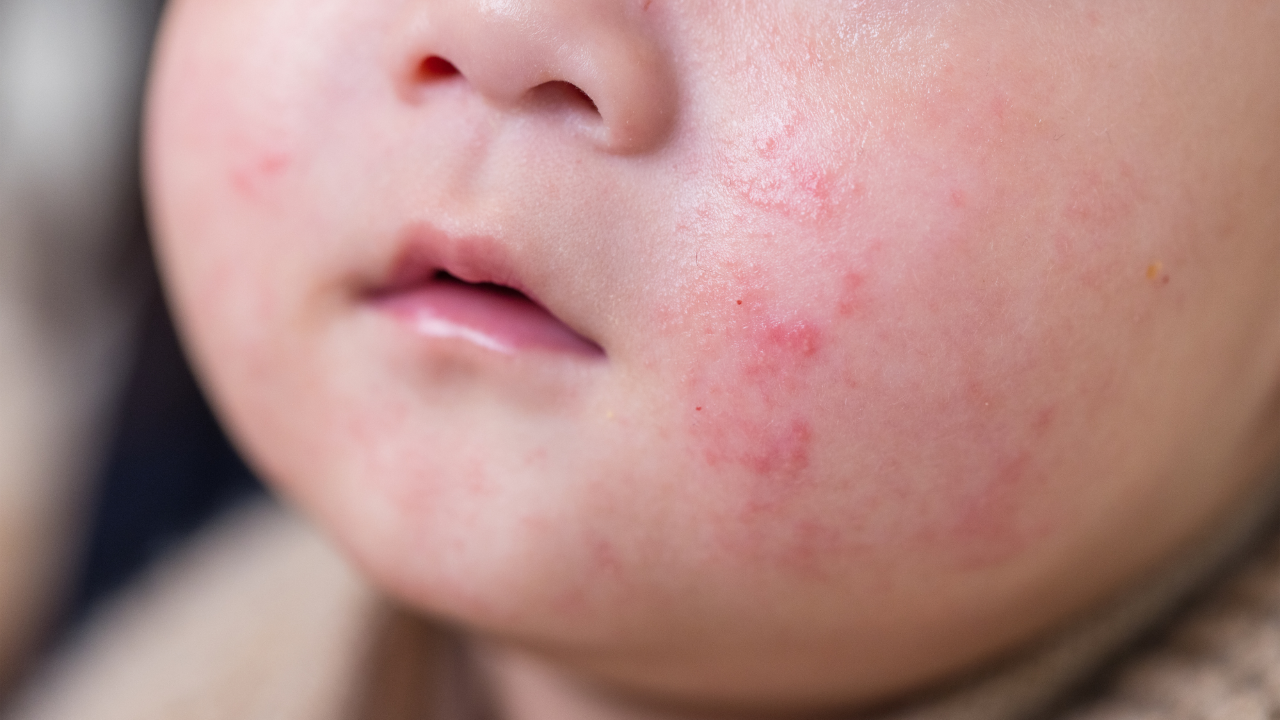
When eczema shows up, most of the time the advice is pretty straightforward.
You’re given a cream, told to apply it, and hope it clears.
And sometimes it helps.
But what I’ve noticed—both in my own experience and with the families I work with—is that we’re rarely encouraged to look a bit deeper at what might be going on underneath.
The skin and the gut are connected
Your baby’s skin doesn’t function on its own.
It’s closely linked to what’s happening inside, especially in the gut.
At the beginning of solids, your baby’s digestive system is still developing. It’s learning how to break down food, absorb nutrients, and handle new proteins.
And during that phase, it can be a bit sensitive.
Sometimes, when digestion is a little overwhelmed or not quite ready for certain foods, it can show up on the skin.
This is something I see often around the time solids are introduced.
Why this stage can feel tricky
You’re introducing new foods.
You’re trying to do the right thing.
And then something shows up on your baby’s skin.
It’s easy to feel unsure.
Is it something they ate?
Is it normal?
Should you stop or continue?
There isn’t always a clear answer given, and that’s where it can feel confusing.
Why digestion matters
When we only focus on the skin, we’re looking at what’s happening on the surface.
But digestion is often part of the picture.
At this stage, your baby’s gut is still learning. Some foods can be harder to handle early on, especially depending on how they’re introduced and in what order.
That doesn’t mean those foods are “bad.”
It just means timing and sequence can make a difference.
And when digestion is supported, things often feel smoother—not just for the gut, but for the skin as well.
A more intentional way to approach solids
This is why I put a lot of emphasis on what foods come first and how they’re introduced.
Not in a restrictive way, but in a way that works with your baby’s development.
Starting with foods that are gentler on digestion, and paying attention to how your baby responds, can make this stage feel much more manageable.
It gives you a way to move forward without guessing.
If you want guidance with this
This is exactly what I guide parents through inside The Baby Meal Map.
👉 Learn more about The Baby Meal Map here
It’s a step-by-step framework for starting solids in a way that supports your baby’s digestion and helps you recognise how they’re responding to different foods.
Inside, you’ll learn how to:
- introduce foods in an order that’s easier on your baby’s gut
- build a strong foundation for digestion (which often supports the skin too)
- take a slower, more thoughtful approach without feeling overwhelmed
So instead of just reacting to what shows up, you have a way to approach things more proactively.
A simple takeaway
If something is showing up on your baby’s skin, it might be worth pausing for a moment and looking at the bigger picture.
Not to overanalyse, but to consider what your baby’s body might be responding to.
Sometimes, a small shift in how foods are introduced can make a noticeable difference.