
Why Most Baby Purées Are Missing What Your Baby Actually Needs
Mar 23, 2026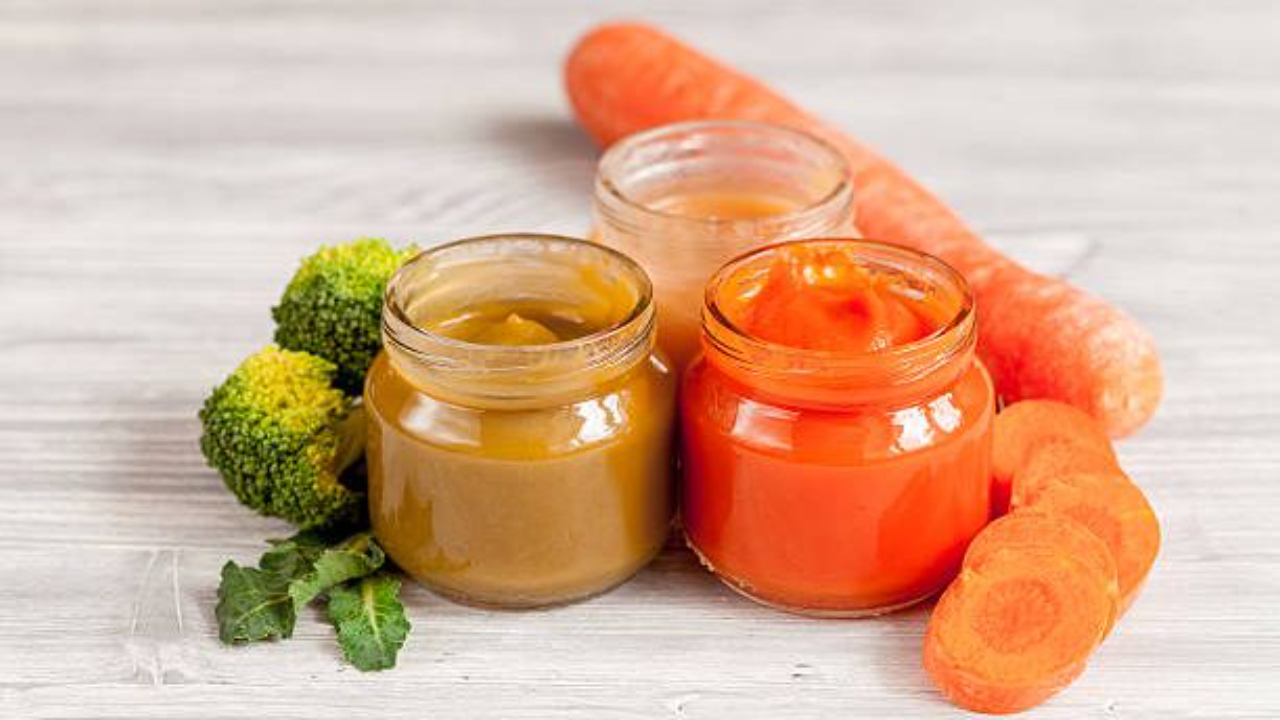
Do baby purées ever look a little… underwhelming to you?
When you look at what’s commonly recommended, it’s often things like carrot, broccoli, spinach.
Very vegetable-heavy.
Very low in fat.
And when you really stop and think about it, you might find yourself wondering…
Is this actually enough for a growing baby?
Most of us start there because it’s what we’ve been shown. It feels safe. Familiar. Easy.
But if you zoom out for a second… it starts to feel like something is missing.
A different way to look at first foods
Around six months, your baby isn’t just “trying food.”
They’re growing fast.
Their brain is developing.
Their body is building.
Their digestive system is learning how to handle real food.
This is not a light stage.
It’s a high-demand stage.
And when you look at it that way, it makes sense to ask:
Are we matching that level of growth with the level of nourishment we’re offering?
What babies actually need in this stage
When I think about feeding a baby, I’m not thinking about what’s easiest to serve.
I’m thinking about what actually supports their development.
At this stage, babies benefit from:
- Healthy fats for brain development and steady energy
- Bioavailable iron, especially as their natural stores start to drop
- Zinc and key minerals for growth and immune support
- Digestive support, as their gut is still maturing
And when you look at that list… plain vegetable purées don’t quite carry that on their own.
They’re not “bad.”
They’re just not enough to lead with.
What we don’t often see anymore
If you look at how babies were fed across traditional cultures, the starting point often looked very different.
Foods like:
- slow-cooked meats
- liver
- sardines
- animal fats
- fermented foods
were commonly introduced early on.
Foods that are naturally rich, deeply nourishing, and supportive of growth.
For many parents today, this can feel surprising.
But when you think about what a baby’s body is actually doing at this stage… it makes a lot of sense.
Why this can feel a bit uncomfortable
If this feels different from what you expected, you’re not alone.
Most of us didn’t grow up seeing babies eat this way.
So of course it can bring up hesitation.
You might be thinking:
- Is this too much?
- Shouldn’t I start simpler?
- Is this really appropriate?
But often, that discomfort isn’t because it’s wrong.
It’s just because it’s unfamiliar.
A more supportive way to approach purées
This doesn’t mean you need to throw everything out and start from scratch.
It’s not about doing more.
It’s about doing things differently.
Instead of building meals around plain vegetables, you start thinking:
How can I make this more nourishing?
That might look like:
- adding healthy fats to a purée
- including slow-cooked meat alongside vegetables
- thinking beyond texture and into nourishment
Small shifts.
But they change everything.
Bringing this into real life
Knowing what’s nourishing is one thing.
But when you’re in your kitchen, with a baby, a full day behind you, and another meal to figure out… that’s where it can start to feel hard.
What do I make?
How do I combine foods?
Am I covering what they need?
That’s the gap most mums feel.
And that’s exactly what I wanted to solve with The Baby Meal Map.
👉 You can explore The Baby Meal Map here
Inside, I guide you through the first 12 weeks of starting solids, step by step.
You get:
- daily meal ideas so you’re not wondering what to serve
- a clear progression of foods, so you know what to introduce and when
- batch cooking guidance to make this work in real life
- simple, nutrient-dense meals built around what your baby actually needs
So instead of standing in your kitchen second-guessing every choice…
You have a plan.
You open it, you follow it or adapt it to your baby and suddenly you enjoy this starting solid experience.