
Why I Think We've Lost the Plot With Starting Solids
May 25, 2026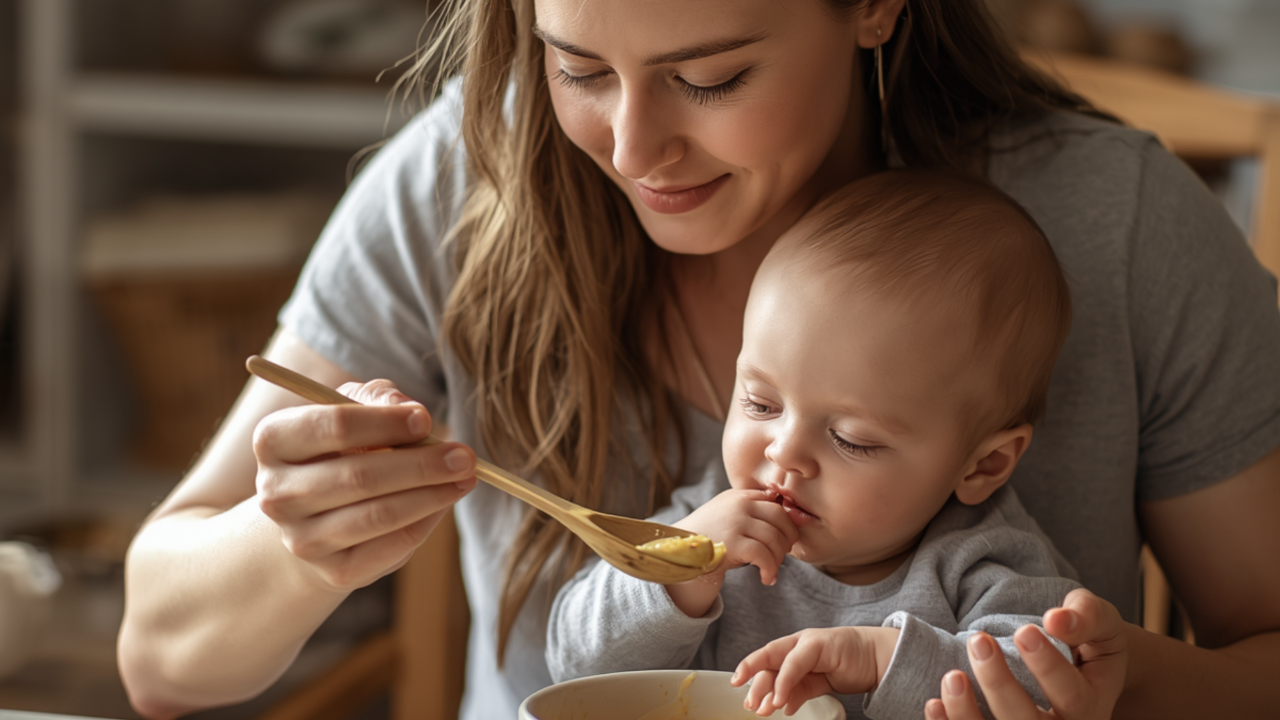
Starting solids should feel like an exciting milestone. Somehow, for most parents, it ends up being one of the most stressful parts of the first year.
One person says start with vegetables. Another says fruit is fine. Someone else says your baby needs 100 foods before one. Then there's advice about allergens, iron-rich foods, finger foods, purées, self-feeding, schedules, gut health, choking, spoon-feeding, baby-led weaning…
And somehow you're expected to make sense of all of it while caring for a baby who still wakes through the night.
After working with more than 3,300 mothers, I've seen this over and over: starting solids has become far more overwhelming than it needs to be.
And I think a big reason for that is because we've drifted away from a very simple question.
What does a growing baby actually need?
Before I think about trends or feeding methods, I always come back to one thing. In the first year of life, babies grow at the fastest rate they ever will again.
Their brains are developing rapidly. Their gut is still immature. Their nutrient requirements are high. And their stomachs are tiny.
Hold that image for a second. A baby in the middle of the most explosive growth of their entire life. And the question in front of you is how to actually feed them well. That's a completely different starting point.
Modern feeding advice doesn't often start from there.
So much of the conversation around starting solids focuses on exposure. Exposure to allergens. Exposure to textures. Exposure to variety. Exposure to more foods.
And while those things can absolutely have a place, I sometimes wonder if we've become so focused on exposure that we've forgotten to ask whether the foods themselves are deeply nourishing.
Because when you look at traditional cultures around the world, babies were not typically started on airy rice cereals and low-fat purées.
There was often a strong focus on nutrient-dense foods that supported growth and development: egg yolks, slow-cooked meats, broth, liver, seafood, animal fats, and other foods rich in the nutrients babies need most.
The foods varied depending on culture and geography, but the intention was similar. Feed the growing baby well.
Thousands of years of people figuring out how to feed growing babies. That knowledge didn't develop by accident.
I think many mothers feel disconnected from modern feeding advice. Especially when it tells them to fear foods that humans have traditionally valued for generations.
I see so many mothers doubting themselves over nourishing foods while simultaneously being told to prioritise crackers, puffed snacks, and processed cereals marketed specifically for babies.
And I understand why it feels confusing.
Because deep down, many parents instinctively know that a rapidly growing baby probably needs more than watered-down fruit purée and plain rice cereal.
That doesn't mean every baby needs the exact same approach. It doesn't mean feeding has to become rigid or extreme.
But I do think we need more nuance in this conversation.
Babies are not tiny adults. Their digestive systems are immature. Their iron needs increase rapidly after six months. Their brains require specific nutrients for development.
So instead of asking, "What foods are babies allowed to eat?" I think a more useful question is: "What foods truly support growth and development during this stage of life?"
And I think it's worth sitting with that.
This is exactly why I created The Baby Meal Map. So many mothers are exhausted from trying to piece together feeding advice from social media, blogs, and conflicting recommendations online.
I built The Baby Meal Map to simplify starting solids and help you understand:
- which foods are genuinely nourishing for babies
- how to build balanced meals without overthinking it
- how to support gut health and digestion
- ways to introduce foods confidently and calmly
- what babies actually need during this stage of rapid growth
Inside The Baby Meal Map, you learn enough about what your baby actually needs at this stage that the decisions start to feel obvious. You stop holding your breath every time you put food in front of them.
You deserve to enjoy this stage with your baby.
A more grounded way to approach starting solids
What I see most often isn't parents who need more information. It's parents drowning in it. What actually helps is a framework that makes biological sense, that they can use without overthinking it, and that gives them permission to trust what they're seeing in front of them.
That's what I built The Baby Meal Map to be. A place to come back to when the conflicting advice starts piling up. A clear, practical approach to starting solids that actually reflects what babies need.