
Are Baby Purées Enough? What Early Feeding Actually Needs
May 07, 2026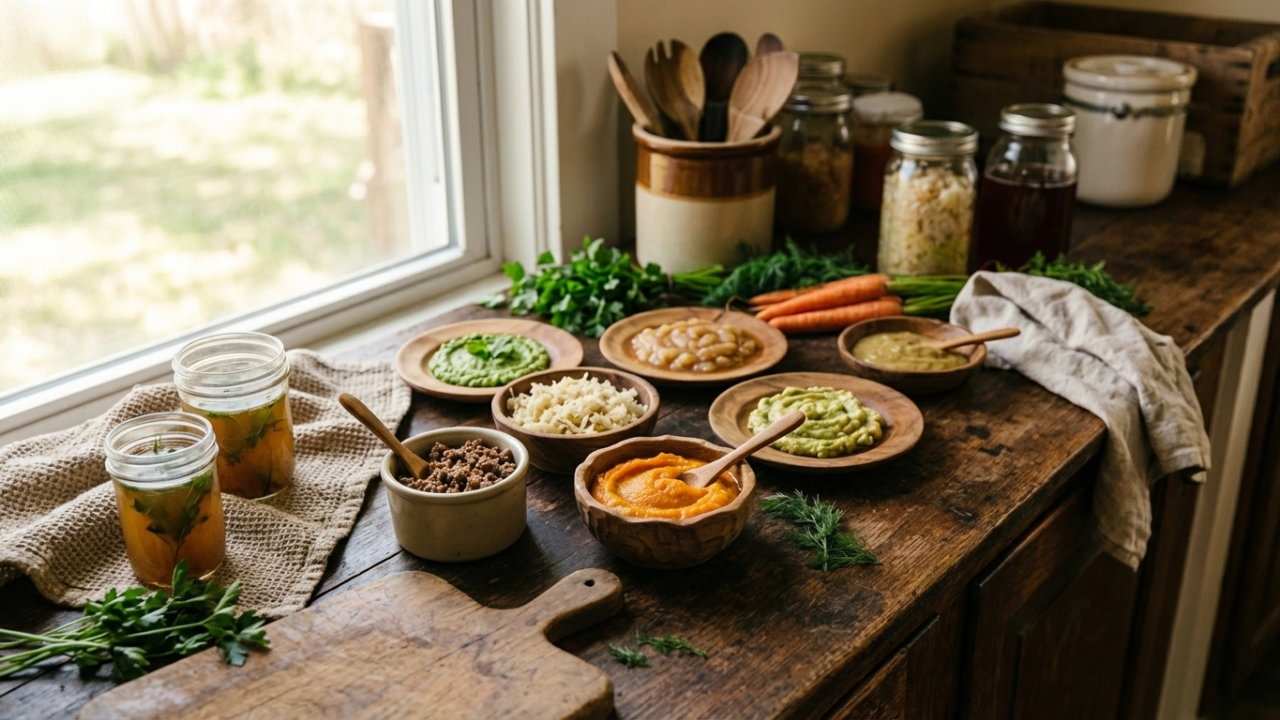
Let me describe a typical baby food aisle to you.
Carrot. Broccoli. Spinach. Pea. Maybe a "mixed vegetable medley" if you're feeling adventurous. Everything smooth, everything mild, everything looking suspiciously similar despite being from different brands with different coloured labels.
And I'm not here to tell you these foods are harmful. They're not. But I am going to say something that might feel slightly uncomfortable: they are also not doing very much.
Babies are in one of the most nutritionally demanding stages of human life. The purée aisle has not received that memo.
Around the time solids begin, babies are growing at a rate they will never match again. Their brains are developing. Their guts are maturing. Their immune systems are being built, essentially from scratch, in real time.
And the nutritional demands of that process are specific. We're talking about:
- Fats that support brain growth and provide steady energy
- Iron in forms the body can actually absorb and use
- Zinc for immune development
- Foods that work WITH the gut as it matures, not just foods that are easy to blend
A smooth carrot purée with no fat is not doing that.
When I looked at how other cultures have fed babies for centuries, something became obvious quite quickly
Modern first-food recommendations are remarkably similar across most mainstream approaches. Light. Plant-based. Soft. Easy to prepare. No Fat. Steamed. Very gentle on parents' anxiety, arguably less thoughtful about what a rapidly developing body actually needs.
Traditional cultures often did something quite different. They didn’t have a PhD in infant nutrition, but they just knew. They were working with what they had and feeding babies the same nourishing foods that kept adults strong. Slow-cooked meats. Animal fats. Organ meats in small amounts. Fermented foods in some contexts.
This isn't about villainising veggie purées
But what you need to ask yourself... What is your baby's body actually trying to do right now, and are the foods you're offering supporting that?
Babies don't need complicated. They need nutrient-dense. They need foods their bodies can actually use. And sometimes that means the first foods look less like a supermarket pouch and more like something your great-grandmother would have recognised.
What The Baby Meal Map is built on
Inside 👉 The Baby Meal Map, the whole approach starts from gut health and nutritional density as the foundation. We're not working from a generic soft-food list. We're working from an ancestral framework that asks: what does a developing baby gut actually need, and how do we offer it in a way that's practical for real life?
You'll find a 12-week step-by-step feeding plan built around real, nutrient-dense first foods, guidance on which ancestral foods to introduce and how to prepare them, and a clear structure that makes the whole thing feel manageable without requiring you to become a nutritionist or spend three hours in the kitchen every day.
The thing I want you to take away from this
Early feeding is not complicated. But it does require a slightly different question than "what is easy to blend?"
The question that changes everything is: what does my baby actually need right now, and am I offering it?
When you start there, the whole first foods conversation looks different. Less about ticking boxes from a standard list, and more about building something real from the very beginning.
That's what The Baby Meal Map is for.